Some driveway finishes look fantastic when they’re first installed but become frustrating to maintain over time. Pavers can shift, weeds find their way into joints, and certain decorative surfaces require more upkeep than homeowners expect.
That’s one reason many people are turning to sawcut concrete. It delivers the clean lines and sophisticated appearance often associated with premium paving materials while keeping the strength and practicality of a solid concrete surface.
The result is a driveway or outdoor area that looks carefully designed without creating a long list of maintenance tasks in the years ahead.
For homeowners who want something more refined than plain concrete but less demanding than traditional paving, saw cut concrete often sits in a very appealing middle ground.
What Is Saw Cut Concrete?
At its core, saw cut concrete starts as a standard concrete slab.
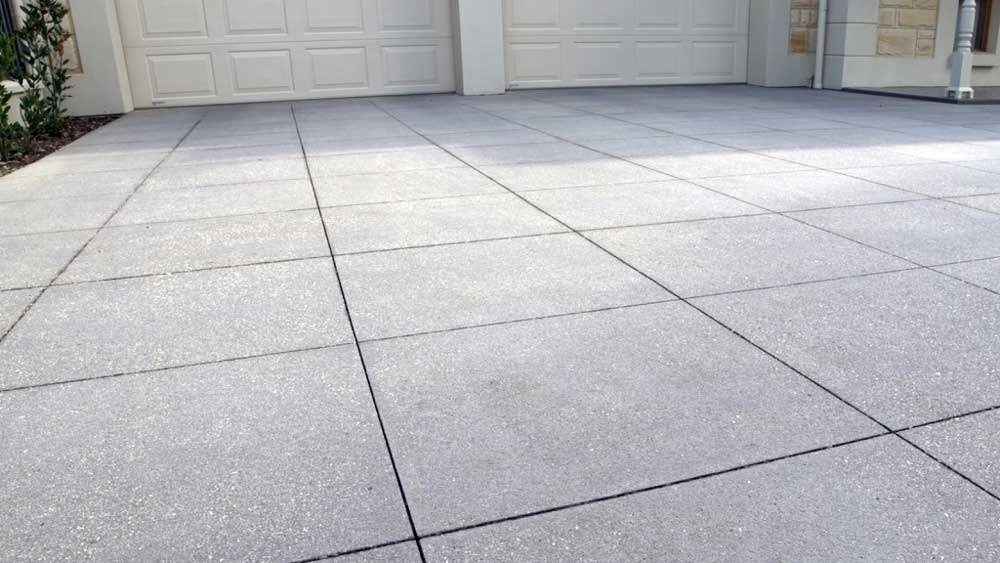
Once the concrete has cured sufficiently, precision cuts are made into the surface to create decorative patterns and design elements. These cuts can mimic the appearance of large paving stones, tiles, geometric layouts, or custom architectural designs.
Unlike actual pavers, the surface remains one continuous slab. The decorative lines are cut into the concrete rather than created by installing hundreds of separate pieces.
This distinction makes a significant difference.
The finished surface delivers much of the visual appeal associated with premium paving while avoiding some of the common issues that develop when individual units move, settle, or separate over time.
The popularity of saw cut concrete designs has grown steadily because homeowners appreciate both the appearance and practicality of the finish.
Why Homeowners Are Moving Away from Traditional Pavers
Pavers remain a popular choice, but they are not without drawbacks.
Even well-installed paving systems can experience movement over time. Tree roots, soil movement, weather changes, and vehicle loads can all contribute to uneven surfaces.
Then there are the joints.
Weeds have a habit of finding opportunities wherever they can. Small gaps between pavers often become the perfect place for unwanted growth. Keeping those joints clean may require regular maintenance that many homeowners would rather avoid.
Saw cut concrete addresses many of these concerns.
Because the surface remains a single slab, there are no individual pavers shifting independently. The decorative pattern is created visually rather than structurally.
That doesn’t mean saw cut concrete is completely maintenance-free, but it generally reduces several of the ongoing issues commonly associated with traditional paving systems.
The Appeal of Clean Architectural Lines
One reason saw cut concrete works particularly well on modern homes is its ability to create strong geometric patterns.
Many contemporary properties feature clean lines, simple forms, and carefully planned landscaping. Decorative paving that appears too busy can sometimes compete with these design elements.
Saw cut concrete often feels more restrained.
The precision-cut lines add visual interest without overwhelming the surrounding architecture. This creates a more sophisticated appearance that suits a wide range of home styles.
Large square layouts, rectangular grids, and custom geometric patterns remain especially popular because they complement modern residential design.
The effect is subtle but effective. Visitors may not immediately focus on the driveway itself, yet the entire property feels more polished and intentional.
Why Saw Cut Concrete Works So Well for Driveways
Driveways place significant demands on any paving material.
They must support vehicle traffic, withstand changing weather conditions, and maintain their appearance despite constant use.
A saw cut concrete driveway offers several advantages in this environment.
The continuous concrete slab provides strength and stability. Because the decorative pattern is cut into the surface rather than assembled from separate pieces, there are fewer opportunities for movement or settlement problems.
This can be particularly beneficial on larger driveways where maintaining a level surface becomes increasingly important.
The decorative cuts also help break up large expanses of concrete visually.
A plain concrete driveway can sometimes feel oversized or unfinished. Carefully designed saw cuts create structure and proportion, making the space appear more refined.
For homeowners seeking a premium appearance without introducing unnecessary complexity, this balance often makes a lot of sense.
Beyond Driveways: Saw Cut Concrete Patios and Outdoor Spaces
The benefits of saw cut concrete extend well beyond driveways.
Outdoor entertaining areas have become increasingly important in Australian homes. Patios, alfresco spaces, pool surrounds, and garden courtyards are often treated as extensions of indoor living areas.
In these settings, aesthetics matter just as much as functionality.
A saw cut concrete patio can create the appearance of large-format stone paving while maintaining the durability of a solid slab.
This works especially well when homeowners want consistency across multiple outdoor spaces. The same design language can be carried from the driveway through pathways and into entertaining areas.
The result feels cohesive rather than pieced together.
Many homeowners also appreciate that furniture sits securely on a continuous concrete surface. There are no uneven joints or shifting pavers creating instability beneath tables, chairs, or outdoor kitchens.
Popular Saw Cut Concrete Designs
One of the biggest advantages of saw cut concrete is the flexibility it offers.
Simple grid patterns remain among the most requested options. These layouts create a clean and timeless appearance that works with virtually any architectural style.
Larger square designs often suit contemporary homes, while rectangular patterns can help elongate or visually widen certain spaces.
Some homeowners choose custom layouts that reflect specific architectural features within the property. Curved cuts, diagonal patterns, and feature borders can all be incorporated into the design.
Colour also plays an important role.
Saw cut concrete can be combined with coloured concrete finishes to create additional visual impact. Contrasting colours sometimes highlight the cut pattern, while more subtle colour choices create a softer and more understated appearance.
The best designs usually balance creativity with restraint. An overly complicated pattern can quickly become dated, whereas simpler layouts tend to remain attractive for many years.
See also: How Exclusive Lead Generation Gives Businesses a Competitive Advantage
Maintenance Remains Relatively Straightforward
When discussing decorative concrete, maintenance is often one of the first questions homeowners ask.
The reality is that every outdoor surface requires some level of care.
The difference lies in how much effort is required to keep it looking good.
Saw cut concrete generally offers a manageable maintenance profile. Regular cleaning helps remove dirt, debris, and organic matter. Periodic resealing may also be recommended depending on usage and environmental conditions.
Compared to surfaces that contain numerous joints, the maintenance process is often simpler.
There is less opportunity for weed growth, fewer concerns about shifting materials, and fewer areas where dirt can accumulate.
If you’re considering decorative concrete for a driveway, patio, or outdoor entertaining area, it can be helpful to discuss design options with experienced professionals. You can reach out to us to explore different patterns, finishes, and layouts that suit your property.
The right design often comes down to understanding how the space will be used and how it fits within the broader appearance of the home.
Choosing the Right Contractor Matters
Decorative concrete may appear simple from a distance, but achieving high-quality results requires experience.
The placement of saw cuts, the timing of installation, surface preparation, and finishing techniques all influence the final appearance.
Poorly planned cuts can make a design feel awkward or inconsistent. Well-executed layouts, on the other hand, create a sense of balance that feels natural within the space.
Site preparation is equally important.
Many long-term paving problems begin beneath the surface. Proper excavation, compaction, and drainage planning help ensure the finished concrete performs as intended for years to come.
Homeowners often focus heavily on colours and patterns while overlooking these foundational elements. In reality, the preparation work is just as important as the decorative finish itself.
A Practical Alternative to High-Maintenance Paving
Not every homeowner wants to spend weekends managing weeds between pavers or addressing surface movement issues.
At the same time, many people feel plain concrete lacks the visual appeal they want for a prominent outdoor area.
Saw cut concrete fills that gap surprisingly well.
It combines decorative design with the strength of a continuous concrete slab. The clean architectural lines create visual interest, while the simplified structure helps reduce some of the maintenance concerns associated with traditional paving systems.
For driveways, patios, pathways, and outdoor entertaining spaces, that balance continues to make saw cut concrete one of the most appealing decorative concrete options available.
When appearance, durability, and practicality all matter, it’s easy to see why more homeowners are choosing this approach for their outdoor projects.